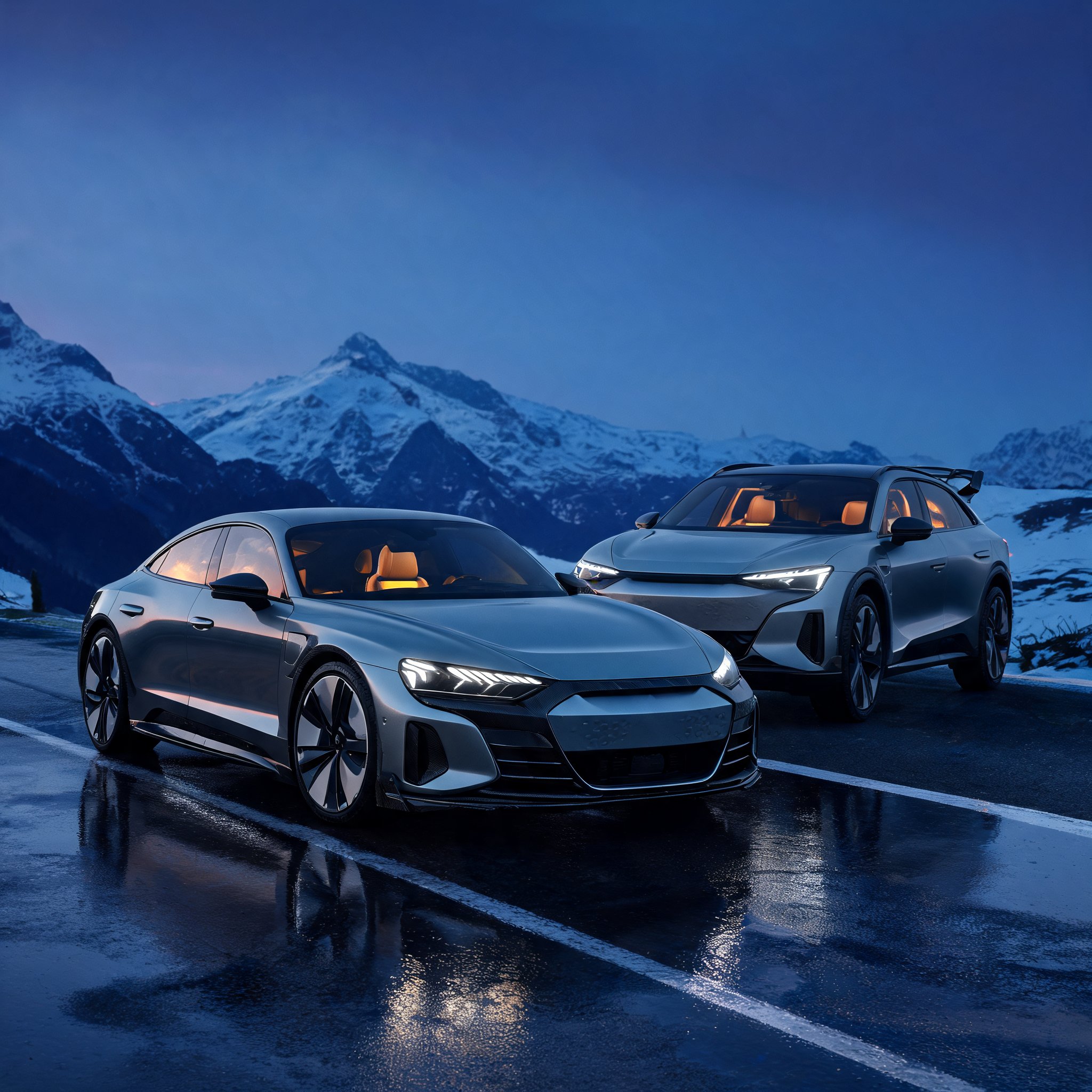
Mercedes-AMG’s first dedicated electric GT models arrive with an unusual brief: they must beat combustion-era performance while also reproducing the sensory theatre that made that era desirable. The new GT 4-Door and the taller GT SUV share the AMG.EA platform and a drivetrain built around up to three electric motors. Yet AMG also fits sound synthesis, simulated gearshifts and seat shakers, hoping to persuade traditional petrolheads that the switch need not feel like a loss. The test drive suggests the engineering is more convincing than the illusion.
AMG model-series manager Oliver Wiech describes the four-door as an electric car for people who hate electric cars, according to the article. That framing captures both the ambition and the risk. The cars are not presented as rational commuting tools but as luxury performance objects. Their success therefore depends on more than acceleration and range: they must satisfy buyers who value character, occasion and a sense of mechanical authenticity.
Strong electric hardware
The technical package is substantial. AMG uses axial-flux motors from its Yasa subsidiary, which the article describes as lighter and more compact than conventional motors while still producing high output. The 800-volt battery uses slim round cells with individual cooling. AMG claims this allows more than 500 kW to remain available for sustained high-speed driving, rather than forcing the temporary power cuts associated with some EVs. That claim is central to the “autobahn-proofed” positioning, although it remains an OEM assertion rather than an independently verified result.
Charging is another headline. AMG quotes up to 600 kW for the four-door at a suitable charger. The SUV can reach 710 kW when specified with the larger 128 kWh battery, according to the article. In the best case, AMG says ten minutes can add 462 km of range to the four-door and around 454 km to the SUV. Regenerative braking is rated at up to 400 kW. These figures are conditional on charger capability and battery state, but they show where AMG is trying to differentiate: not only outright acceleration, but repeatable performance and shorter stops.
The four-door faces the harder test
The GT 4-Door is the flagship. It is a low, sleek four-door coupé aimed at the Porsche Taycan Turbo GT and Lucid Air Sapphire, and its performance ranges from quick to extreme. All versions have all-wheel drive and a 106 kWh battery:
- GT 53: 400 kW, up to 794 km WLTP, from €115,430.
- GT 55: 600 kW, up to 700 km WLTP, from €154,700.
- GT 63: 860 kW and up to 2,000 Nm, 0–100 km/h in 2.4 seconds, top speed limited to 300 km/h, from €196,350.
The GT 63’s acceleration is quicker than any road-legal AMG before it, according to the article. Even so, the four-door is judged against the V8 models it replaces. AMG’s response is an elaborate simulation. The sound was recorded from the last GT Black Series, the virtual transmission has a rev limiter, and the seats vibrate to make the V8 character tangible as well as audible. Digital displays can also imitate analogue instruments.
The effect is polished. The test notes that even committed petrolheads may grin while stepping through the fictional gears. But the same test calls it a bluff: a real V8 is not only a soundtrack but a mechanical system with its own vibrations and character. The simulated experience is compared to theatre, professionally staged but not real. That distinction matters because the four-door is explicitly tasked with converting enthusiasts. The better the imitation, the more clearly it points to what is absent.
The SUV makes a more coherent case
The SUV may be the more commercially logical model. It is around 5.09 metres long with a 3.04-metre wheelbase, and its taller, more muscular proportions avoid direct comparison with a classic sports car. It does not have to prove that an electric powertrain can replace the soul of a V8 in the same way. Space, comfort, prestige and a commanding driving position are part of the brief, so the artificial soundtrack can be an entertainment feature rather than an article of faith.
Its practicality is measurable. The boot offers 607 to 1,740 litres, plus 78 litres under the front bonnet. The four-door provides 415 litres and a 41-litre front compartment. The SUV’s rear seat can carry two adults comfortably and three at a squeeze, though legroom is tight. It is also €2,380 cheaper, starting at €113,050. The GT 63 SUV produces up to 860 kW and 2,000 Nm, reaches 100 km/h in 2.5 seconds and tops out at 270 km/h. Its 106 kWh battery is standard, with 128 kWh optional on more powerful variants. AMG quotes up to 700 km WLTP and the same 710 kW charging peak.
The SUV will compete with the Porsche Cayenne, Lucid Gravity and other luxury high-riders, but its wider customer base and easier-to-explain practicality give it room. The four-door must carry the emotional burden of AMG’s electric transition; the SUV can simply be fast, luxurious, spacious and slightly outrageous. That makes the simulated V8 less contradictory in the taller car, even though the hardware and the theatre are largely the same.
Substance versus spectacle
The test also questions some of the theatre. Three rotary controls on the centre console adjust throttle response, power distribution and traction control, and the electronics can help the driver drift. On a closed track this may be entertaining, but the article criticises it as gimmicky in everyday use and argues that a car driving this well does not need such tricks. The concern is not that the GT lacks ability; it is that AMG risks presenting a serious sports car as a toy.
The broader conclusion is that AMG has built a technical masterpiece without fully solving the emotional problem. The four-door demonstrates that electric performance can be extremely rapid, repeatable and quick to recharge. It cannot, by software alone, recreate the mechanical authenticity that some buyers associate with a V8. The SUV avoids that test by aiming at different expectations. In that sense, the taller model may be the more honest route into AMG’s electric future: it can use the fake V8 as a trick, not as a substitute for faith.